Uncategorized
How to Spot Fake K2 Products: Protecting Yourself in a Sketchy Market
Sep
The Counterfeit Problem Nobody Talks About
Let’s get real for a minute: the K2 market has a counterfeiting problem. Walk into any smoke shop in certain cities, browse random websites, or check out marketplace listings, and you’ll find fake products everywhere. These aren’t just “lower quality” alternatives — they’re potentially dangerous copies made by people who don’t understand (or don’t care about) proper dosing, chemical safety, or basic quality control.
I’ve seen the aftermath of people consuming fake K2. It’s not pretty. Uneven spraying leads to unpredictable doses. Unknown chemicals replace proper compounds. Packaging looks convincing but contains garbage inside. The financial loss sucks, but the health risks are what should really scare you.
This guide exists because you deserve to know what you’re putting in your body. These aren’t foolproof methods — scammers get sophisticated — but they’ll help you avoid the most obvious fakes and identify red flags that scream “stay away.”
Packaging Tells: The First Line of Defense
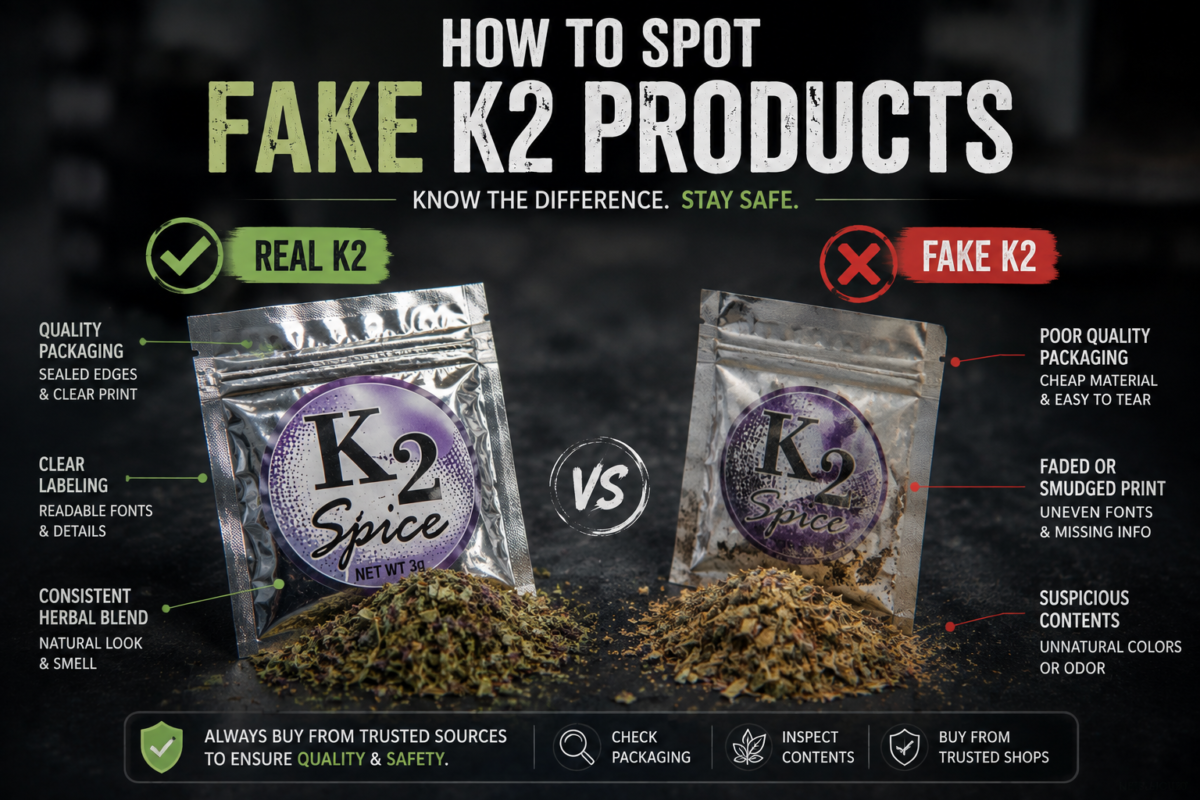
Real K2 manufacturers invest in professional packaging because they understand presentation matters. This doesn’t mean flashy — it means professional. Look for clear labeling that includes batch numbers, manufacturing dates, potency information, and ingredient lists. Legitimate companies want you to know what you’re buying.
Fake packaging often has telltale signs: pixelated logos, misspelled product names, colors that look slightly “off” from authentic versions, and missing regulatory compliance markings. If the packaging looks like it was designed in Microsoft Paint and printed on a home inkjet, trust your instincts.
Barcode verification is becoming standard practice. Many authentic products now include scannable codes that verify authenticity through manufacturer databases. If your product claims to be from a major brand but has no verification system, that’s suspicious.
Weight and feel matter too. Professional packaging uses specific materials — certain plastics, foil linings, thicknesses of cardboard. Counterfeiters often cheap out here because quality materials eat into their profit margins. If the package feels flimsy, lightweight, or wrong in your hands, investigate further.
The Visual Inspection: What the Product Itself Reveals
Once you open the package, the real examination begins. Authentic K2 herbal blends have consistent appearance — the cut size is uniform, the color is even throughout the material, and there’s no visible pooling of liquid or dry spots. Quality control ensures every gram looks like every other gram.
Fake products often show obvious application problems. You might see dark spots where liquid pooled during spraying, completely dry sections with no active compounds, or inconsistent coloring that suggests multiple batches mixed together. These aren’t “variations” — they’re quality control failures.
The material itself matters. Premium K2 uses quality carrier herbs that are properly cured and stored. They should smell like herbs, not chemicals. If your product smells like industrial solvents, nail polish remover, or has no smell at all, something’s wrong. Proper synthetic cannabinoids have distinct but not overpowering chemical signatures when raw.
Texture is another giveaway. The material shouldn’t be wet or sticky — that’s improper curing or excessive application. It shouldn’t be dusty or crumbly either — that suggests age or poor storage. You’re looking for dry but supple, like quality tea or tobacco.
Liquid Spray Specific Red Flags
For liquid K2 products, the verification game is different. Authentic sprays come in proper bottles with child-resistant caps, professional labels with ingredient lists, and consistent liquid appearance. The solution should be clear or uniformly colored — not cloudy, not separating into layers, not containing visible particles.
Shake the bottle gently. Quality spray solutions reintegrate quickly if separation occurs. If you see permanent layering, oily residues, or particles that won’t dissolve, you’re looking at improper formulation or degradation.
Smell test applies here too. While liquid compounds have stronger chemical signatures than dried material, they shouldn’t smell toxic or completely foreign. If it smells like cleaning products or has no smell whatsoever (suspicious for concentrated active compounds), question the source.
Source Verification: Where You Buy Matters Most
Here’s the uncomfortable truth: if you’re buying K2 from random gas stations, unverified online marketplaces, or that guy your friend knows, you’re playing Russian roulette. The counterfeiters target these channels specifically because they’re unregulated and anonymous.
Established vendors like k2sprayshop.com have too much invested in their reputation to risk selling fakes. They have supply chain relationships with manufacturers, quality control processes, and customer service infrastructure. A fake product hurts their business permanently, so they have incentive to verify authenticity.
Check how long the vendor has been operating. Fly-by-night operations pop up, sell garbage, and disappear. Legitimate businesses have history, reviews, and track records. They answer emails, handle complaints, and stand behind their products.
Payment methods reveal legitimacy too. Established vendors use proper payment processors and have professional checkout systems. If someone only accepts sketchy payment methods or cryptocurrency with no buyer protection, that’s a warning sign — not because crypto is bad, but because combined with other red flags, it suggests avoiding traceability.
The Price Reality Check
Everyone loves a deal, but extreme discounting is a major red flag. Quality K2 costs money to produce properly — the compounds, the carrier materials, the manufacturing equipment, the testing, the packaging. If someone’s selling at prices that seem too good to be true, they’re cutting corners somewhere.
This doesn’t mean pay premium prices blindly — some vendors overcharge for mediocre products. But when you see “name brand” products at 50% below market rate, ask yourself why. Often it’s because they’re fake, expired, or stolen goods with questionable storage conditions.
What to Do If You Suspect a Fake
Don’t consume it. This seems obvious, but panic about wasted money makes people make stupid decisions. No amount of money is worth your health. If something seems off, trust that instinct.
Document everything. Take photos of the packaging, the product, any verification codes that failed. Keep receipts and correspondence. This protects you if you need to dispute charges and helps authorities track counterfeiters.
Report it to the vendor you purchased from if they seem legitimate — they may not know their supply chain was compromised. Report to the manufacturer if possible — they care deeply about counterfeits cutting into their market. And consider reporting to relevant consumer protection agencies.
Building Safe Buying Habits
Protecting yourself from fake K2 isn’t complicated, but it requires consistent habits. Buy from established sources with verifiable histories. Check packaging and product quality on every order — don’t get complacent because previous orders were fine. Keep up with manufacturer announcements about new verification systems or known counterfeits circulating.
Join communities where experienced users discuss sources and products. Not to find new vendors necessarily, but to stay informed about fakes circulating, new verification methods, and which products currently have counterfeiting problems. Knowledge is your best defense.
The Bottom Line
The counterfeit K2 market exists because there’s money to be made and enforcement is difficult. You can’t eliminate the risk entirely, but you can dramatically reduce it by buying smart, inspecting carefully, and prioritizing your safety over convenience or savings.
When in doubt, stick with vendors who have earned trust over time. k2sprayshop.com has built its reputation on authentic products, transparent sourcing, and customer safety. In a market flooded with fakes, that reliability matters more than ever.
