Uncategorized
The Evolution of Synthetic Cannabinoids: From Garage Chemistry to Lab Precision
Sep
The Early Days: Where It All Started
To understand where synthetic cannabinoids are today, you need to know where they came from. The story starts in legitimate pharmaceutical research labs, not underground operations. Scientists were investigating compounds that could interact with cannabinoid receptors for therapeutic purposes — pain management, appetite stimulation, neurological conditions. These were serious research programs at major institutions.
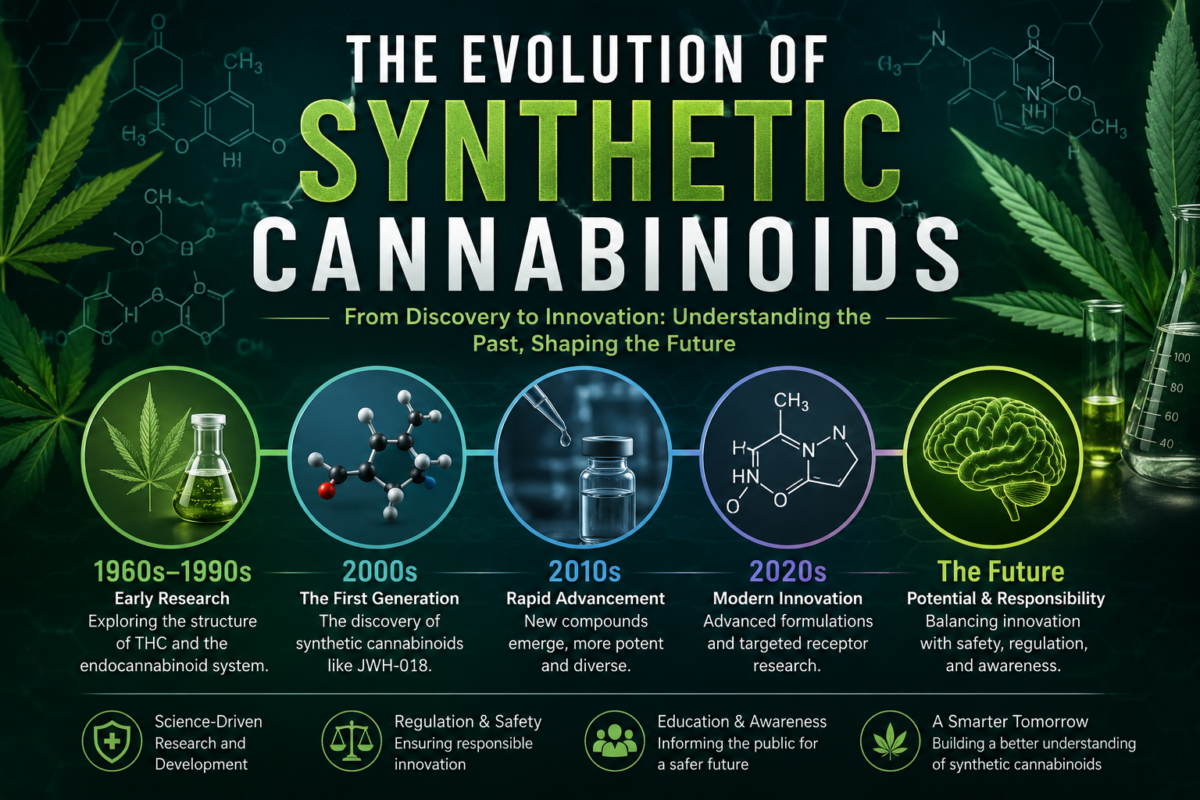
The compounds that would become “Spice” or “K2” started as research chemicals with alphanumeric designations like JWH-018, CP-47,497, and HU-210. They were created by brilliant chemists exploring the boundaries of pharmacology, published in academic papers, and intended for laboratory study. Then the internet happened.
By the mid-2000s, enterprising individuals realized these unscheduled compounds could be synthesized using publicly available research, sprayed onto dried plant material, and sold as “incense” or “potpourri” with wink-wink marketing. The first generation of K2 was born — crude, unpredictable, but legal in most jurisdictions and producing effects similar to cannabis.
Those early products were genuinely dangerous, but not for the reasons people think. The compounds themselves, when pure and properly dosed, weren’t exceptionally toxic. The danger came from amateur manufacturing. Kitchen-sink operations with no quality control, no understanding of proper dosing, and no concern for consumer safety. One batch might be weak, the next overwhelming, and consistency was nonexistent.
The Cat and Mouse Game Begins
As these products gained popularity, authorities noticed. The initial response was predictable: ban the specific compounds being sold. So JWH-018 became illegal, and manufacturers switched to JWH-073. That got banned, so they moved to AM-2201. Each ban spawned new variants as chemists tweaked molecular structures to stay ahead of legislation.
This created the “whack-a-mole” problem that still exists today. Legislators can’t ban molecular structures that don’t exist yet, so every prohibition just drives innovation. The compounds became more complex, more potent, and sometimes more problematic as manufacturers chased stronger effects to differentiate their products.
The second generation of synthetic cannabinoids (roughly 2009-2012) saw increased potency and more diverse chemical structures. Products like “K2,” “Spice,” and “Black Mamba” became household names in certain circles. The market exploded globally, with Europe and the United States seeing massive popularity among people seeking cannabis-like effects without legal risk or drug testing concerns.
This era also saw the first major public health scares. Emergency room visits increased, media coverage sensationalized the risks, and governments scrambled to respond. What got lost in the panic was that most problems stemmed from unknown dosage and contaminated products, not necessarily the compounds themselves when used responsibly.
Professionalization and Market Maturation
Around 2013-2015, the market began changing. The wild west phase couldn’t last forever. Serious manufacturers emerged who understood that sustainable business required quality control, consistent products, and customer safety. These weren’t hobbyists anymore — they were professionals investing in proper equipment, testing protocols, and supply chain management.
This professionalization changed everything. Products became more predictable. Dosage became standardized. Quality control meant fewer contaminated batches and more consistent experiences. The best manufacturers started operating like legitimate supplement or pharmaceutical companies, even if they couldn’t advertise that way publicly.
The compounds evolved too. Third and fourth generation cannabinoids moved beyond the early JWH and AM series to more sophisticated molecules like PB-22, 5F-PB-22, AB-FUBINACA, and others. These offered different effect profiles — some more euphoric, some more sedating, some with distinct duration characteristics. The market diversified beyond “cannabis alternative” to specific products for specific experiences.
Online retail became the dominant distribution channel. Physical smoke shops still existed, but the internet allowed manufacturers to reach customers directly, build brands, and establish reputations through reviews and community discussion. This transparency, paradoxically, improved safety — bad actors couldn’t hide as easily when customers shared experiences publicly.
Today’s Landscape: Precision and Specialization
Modern synthetic cannabinoid products bear little resemblance to the garage operations of 2008. Today’s premium manufacturers use pharmaceutical-grade equipment, source pure compounds from legitimate chemical suppliers, and employ quality control measures that would be recognizable to any supplement or pharmaceutical company.
The compounds have become incredibly diverse. Different molecules produce markedly different effects — some optimized for relaxation, others for creativity, others for social situations. Experienced users now choose specific compounds for specific purposes rather than just buying whatever “K2” is available.
Delivery methods have evolved too. Early products were exclusively herbal blends. Today’s market includes precision-dosed liquid sprays, infused papers with exact measurements, concentrated extracts for experienced users, and various hybrid products. This specialization lets users choose exactly how they want to consume and exactly what potency they prefer.
The legal landscape remains complicated and varies dramatically by jurisdiction. Some areas have blanket bans on synthetic cannabinoid classes, making entire categories illegal regardless of specific compound. Others regulate by specific chemical structure, creating the ongoing cat-and-mouse dynamic. Smart manufacturers and retailers like k2sprayshop.com navigate this carefully, ensuring compliance with applicable laws while serving customers in permitted areas.
Safety Evolution: From Chaos to Control
The most important evolution has been in safety culture. Early K2 users were basically guinea pigs — trying unknown products from unknown sources with unknown dosages. Today’s informed consumers demand transparency, and reputable vendors provide it.
Batch testing has become standard practice for quality manufacturers. Third-party laboratories verify compound identity, check for contaminants, and ensure potency matches labeling. While not universal, this testing separates professional operations from sketchy ones.
Community knowledge has exploded. Online forums, review sites, and social media groups let users share experiences, warn about bad products, and identify reliable sources. This collective intelligence makes the market safer for everyone — when someone has a bad experience with a fake product, word spreads fast.
Harm reduction approaches have gained traction even among manufacturers. Clear labeling with potency warnings, recommended serving sizes, and “start low, go slow” messaging shows up on premium products. This isn’t just liability protection — it’s recognition that sustainable business requires healthy customers.
Where We’re Headed
The synthetic cannabinoid market will keep evolving. Research continues into new compounds with different receptor binding profiles, potentially offering more specific therapeutic or recreational effects with fewer side effects. The medical research that started this field continues, even as the recreational market drives most current innovation.
Regulation will likely increase in coming years, hopefully shifting toward frameworks that prioritize consumer safety over prohibition. The current approach of banning specific compounds clearly hasn’t worked — it just creates incentive for unknown alternatives. A regulated market with quality control, age restrictions, and safety standards would serve everyone better than the current patchwork.
Technology will drive further changes. Better synthesis methods, improved testing capabilities, and more sophisticated delivery systems are all coming. The gap between “black market” and “pharmaceutical grade” will continue closing as equipment becomes more accessible and knowledge spreads.
Choosing Quality in a Crowded Market
For consumers navigating this evolved landscape, the priorities are clear: source matters more than ever. The difference between premium products from established vendors and mystery products from random sources has never been larger. You have options now that early users never had.
Look for vendors who demonstrate quality commitment through testing, transparency, and consistency. k2sprayshop.com represents this new generation of professional retailers — curated selection, verified sources, and customer education. In a market that started as chaos, these pillars of reliability matter more than ever.
The evolution of synthetic cannabinoids from garage chemistry to lab precision shows what’s possible when markets mature and professionalism replaces amateurism. For informed consumers willing to do their research, today’s options offer experiences that are safer, more predictable, and more tailored to individual preferences than anything available in the early days.
